PALESTINE – The second phase of Gaza ceasefire begun on Wednesday Jan. 14, aiming at extending beyond the military pause.
This phase is the most complex one, seeking a long-term political and security arrangements including Hamas disarmament, the creation of a transitional administration and the launch of reconstruction efforts.
What the Second Phase of Gaza Ceasefire Entails
Below are the main elements of the second phase of the deal:
1. Creation of a Peace Council
The plan includes establishing an interim “peace council” tasked with preparing the political and security ground for a full Israeli withdrawal from Gaza while overseeing disarmament arrangements.
Israel’s Yedioth Ahronoth newspaper reported Thursday that Trump continues preparations to form the council, which he is expected to chair, with former UN Middle East envoy and former Bulgarian foreign and defense minister Nikolay Mladenov managing its day-to-day operations.
The newspaper said Mladenov is expected to oversee the implementation of Trump’s plan and serve as a liaison between the Palestinian technocratic administration and the peace council.
The paper added that the council’s formation is expected to be announced at the World Economic Forum in Davos, Switzerland, on Jan. 23.
2. Israeli Army Withdrawal
The agreement also calls for additional Israeli military withdrawals. Israeli forces still control Gaza’s southern and eastern border areas and large parts of the north, occupying more than half of the territory.
Israel’s public broadcaster KAN reported Thursday that Israel does not intend to withdraw from areas it controls before progress is made on Hamas’ disarmament.
Yedioth Ahronoth reported that Israel is preparing for the possibility of military intervention to forcibly disarm Palestinian factions if they refuse.
3. Disarmament of Palestinian Factions
Hamas has insisted on retaining its weapons, saying it is open to “any proposals that preserve this right while guaranteeing the establishment of a Palestinian state.”
Hamas describes itself as a “resistance movement” against Israel, which the UN considers the “occupying power” in the Palestinian territories.
4. Palestinian Technocratic Government
Turkey, Egypt, and Qatar on Wednesday welcomed the formation of a Palestinian technocratic committee to administer the Gaza Strip, terming it an “important development” toward strengthening stability and improving the humanitarian situation in the territory.
A Palestinian source told Anadolu that arrangements are underway for committee members to travel to Egypt to hold their first meeting on Thursday or Friday. The committee, composed of Gaza residents, will manage civil affairs and basic services in areas from which Israeli forces withdraw.
A UN Security Council resolution adopted Nov. 18 states that Gaza will be administered by a transitional Palestinian technocratic government operating under the supervision of an executive Peace Council led by Trump, according to the resolution.
5. Reconstruction of Gaza Strip
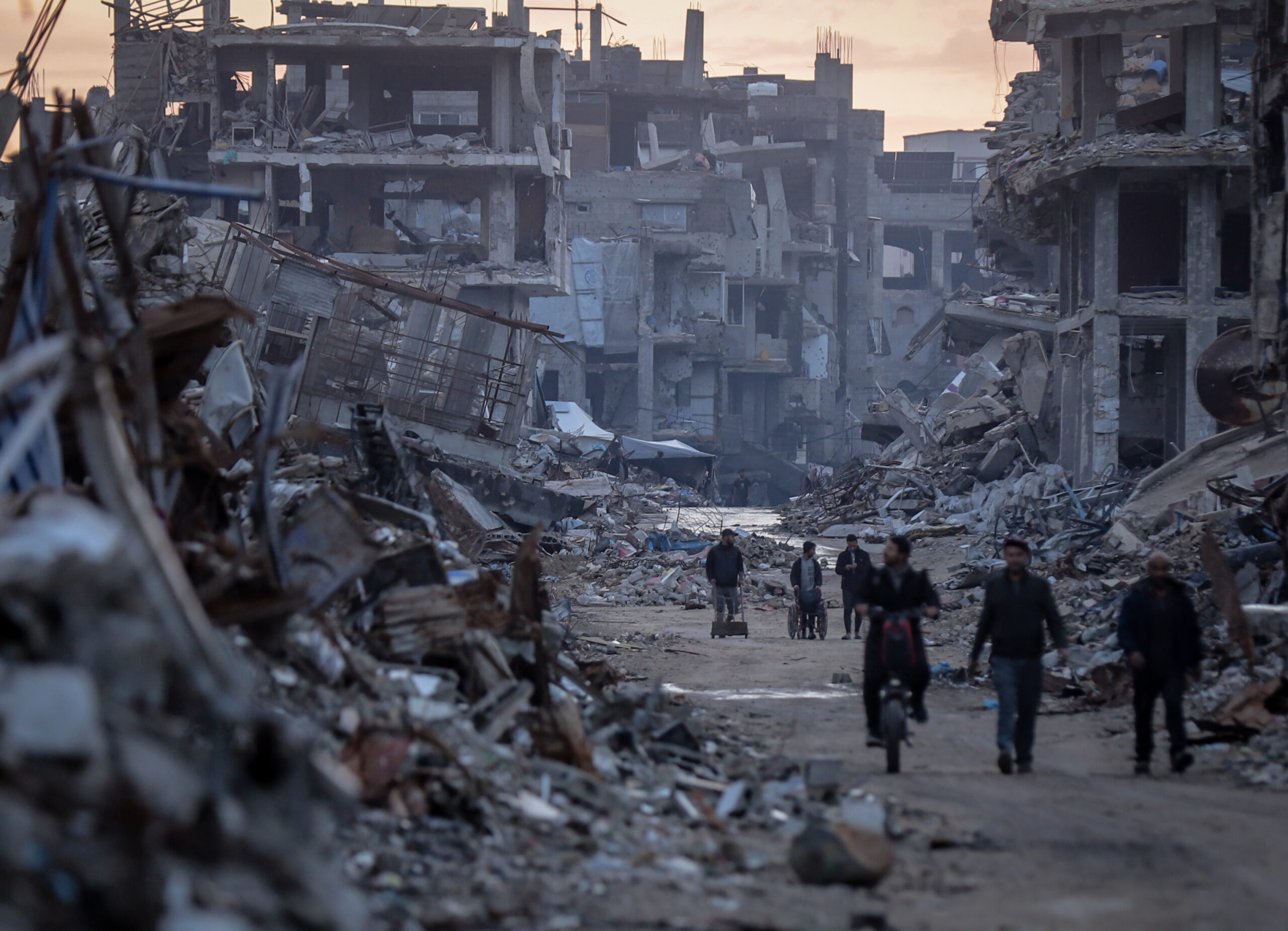
The second phase envisions launching a large-scale reconstruction effort after Israeli attacks destroyed about 90% of Gaza’s civilian infrastructure, with the UN estimating the cost at roughly $70 billion.
Witkoff did not mention reopening the Rafah crossing between Gaza and Egypt as part of reconstruction efforts.
Israel, which controls the Palestinian side of the crossing, considers reopening the terminal one of its last bargaining tools to recover the remains of Ron Givli, according to Yedioth Ahronoth.
Givli is the last Israeli captive in Gaza, who Israel is pressing for the return of his remains, while Hamas says locating and recovering the body may take time due to widespread destruction and a lack of equipment caused by the Israeli blockade.
6. Deployment of an International Stabilization Force in Gaza
The US is also working to form an “international stabilization force” to be deployed in Gaza.
During a meeting of Israel’s Cabinet on Wednesday, ministers were told that Washington is close to announcing the force’s creation, Yedioth Ahronoth reported.
US officials have said at least three countries are willing to contribute troops. Previous reports named Italy, Pakistan, Bangladesh and Azerbaijan as potential contributors, the newspaper said.
The Nov. 18 UN Security Council resolution authorizes the creation of a temporary international force in Gaza through the end of 2027.
What Palestinian Factions are Saying
Palestinian factions and political forces said on Wednesday that they support mediators’ efforts to form a “transitional Palestinian national committee” to administer Gaza and called for conditions that would allow it to assume its duties immediately.
The statement followed a meeting in Cairo at Egypt’s invitation as part of efforts to monitor implementation of the ceasefire agreement, according to Egyptian media.
The factions urged the Peace Council, in coordination with mediators, to pressure Israel to halt its attacks on Palestinians, the statement said.
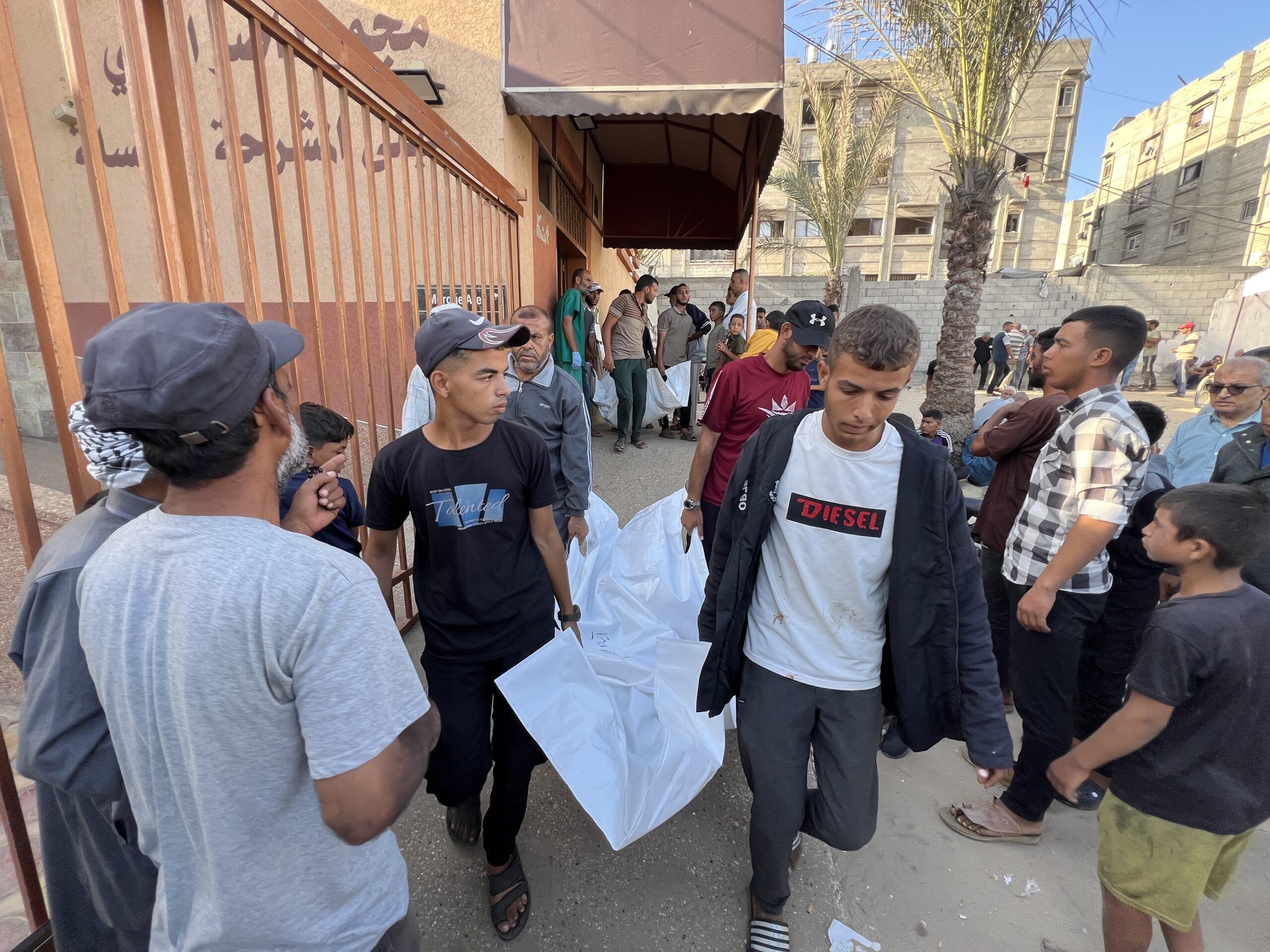
Since the ceasefire took effect, Israeli forces have killed 451 Palestinians, and wounded more than 1,200 according to the Health Ministry. The war has killed more than 71,000 Palestinians and wounded 171,000, most of them women and children, since October 2023.
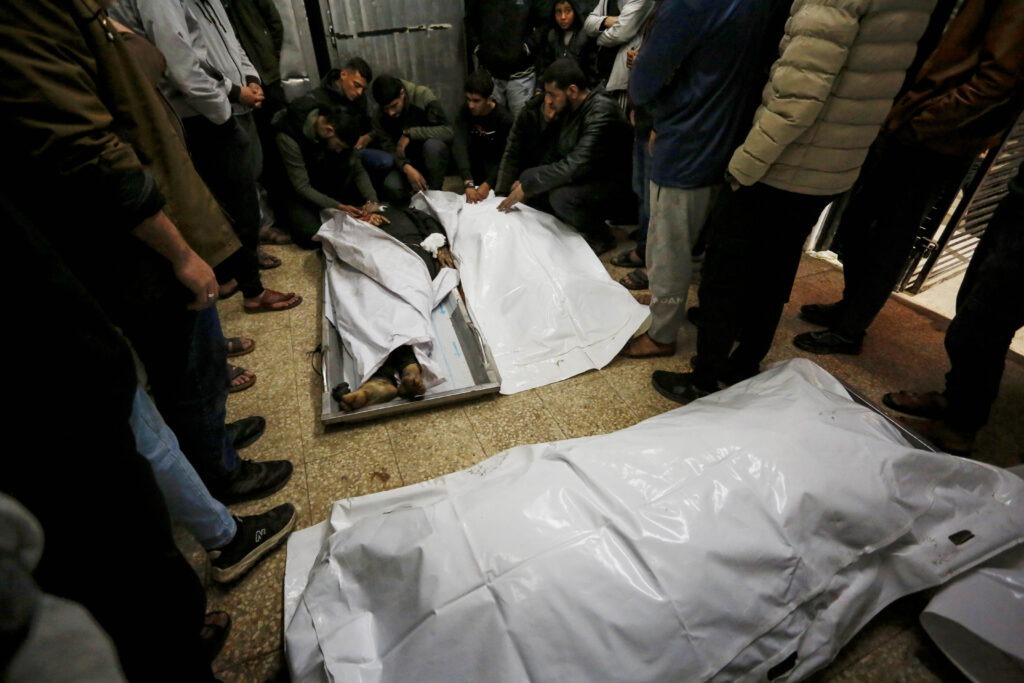
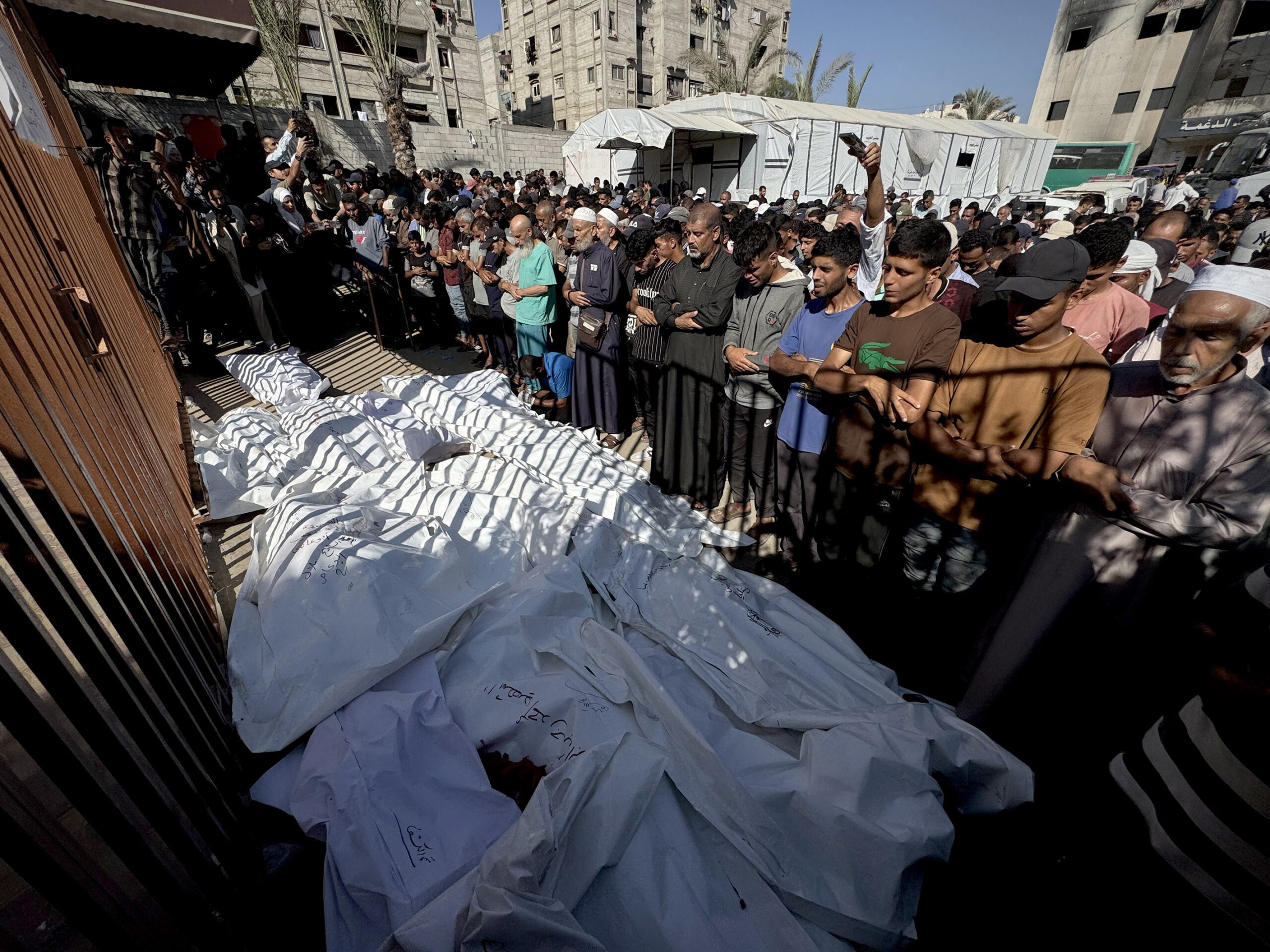
DEIR AL BALAH, GAZA: Bodies of 4 civilians, including a young girl, who were killed when the Israeli army bombed a house belonging to the Palestinian al-Huli family in the city of Deir al-Balah in the central Gaza Strip on January 15, 2026. ( Stringer – Anadolu Agency )
The factions also called for opening border crossings, allowing aid into all parts of Gaza and a full Israeli withdrawal to help restore sustained calm, enable early recovery and begin reconstruction.
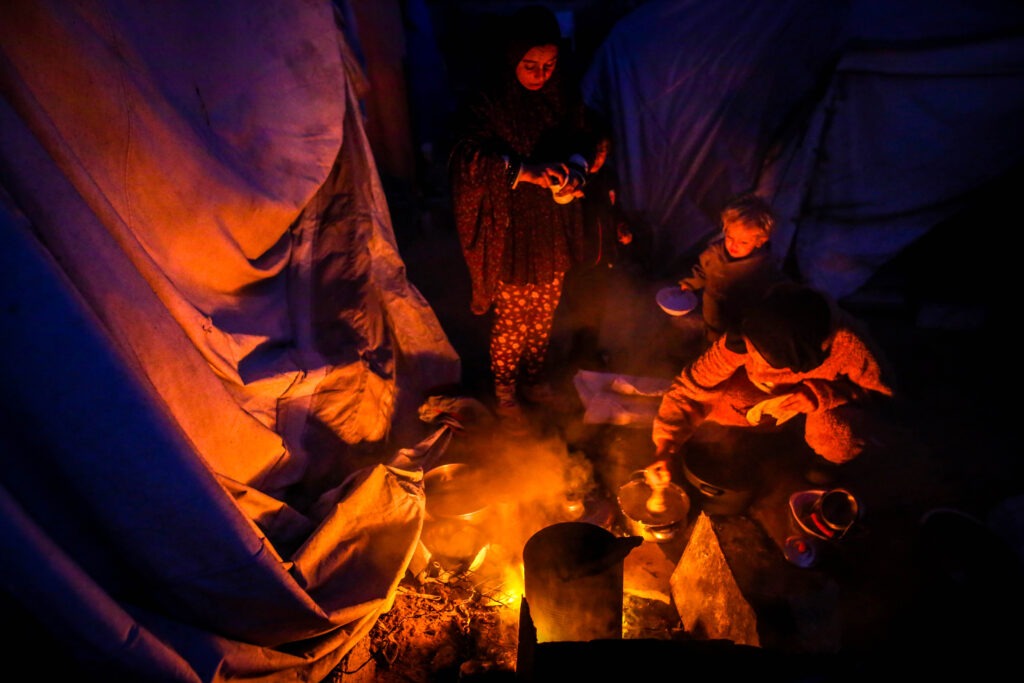
Israel continues to block the agreed flow of food, medicine, medical supplies and shelter materials into Gaza, where about 2.4 million Palestinians live, including 1.5 million who are displaced and facing catastrophic conditions.
What the First Phase Entailed
The first phase of the agreement included a ceasefire and the entry of humanitarian aid that Palestinian groups described as extremely limited and insufficient to meet basic needs, leaving residents on the brink of famine.
It also included the handover of Israeli captives, both living and dead, with the exception of one set of remains, in exchange for Israel’s release of Palestinian prisoners and the return of Palestinian bodies bearing signs of torture, strangulation, starvation and medical neglect.
Gaza’s government media office said Thursday that Israel committed 1,244 ceasefire violations of the deal, killing, wounding and detaining 1,760 Palestinians since the agreement took effect on Oct. 10, 2025.
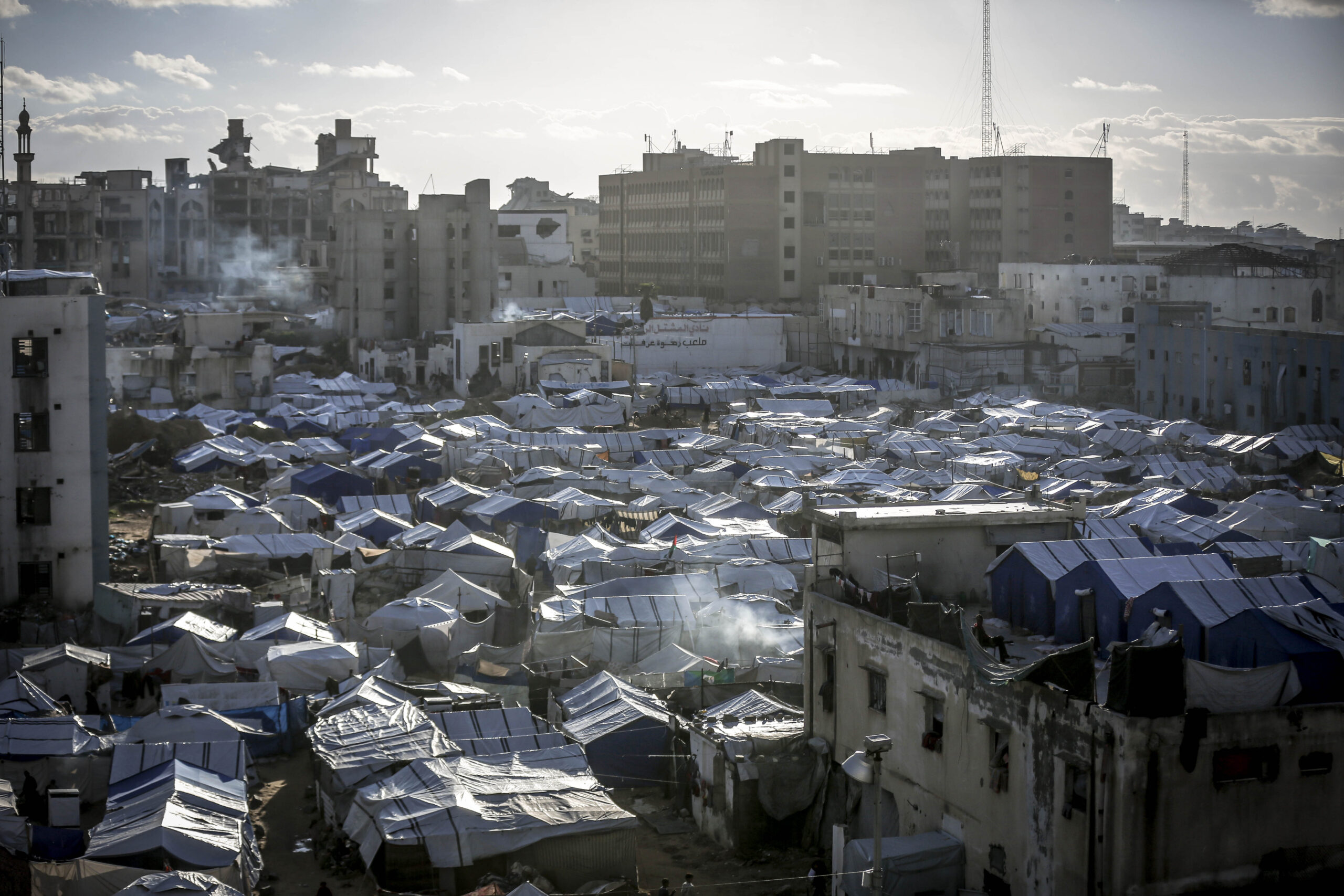
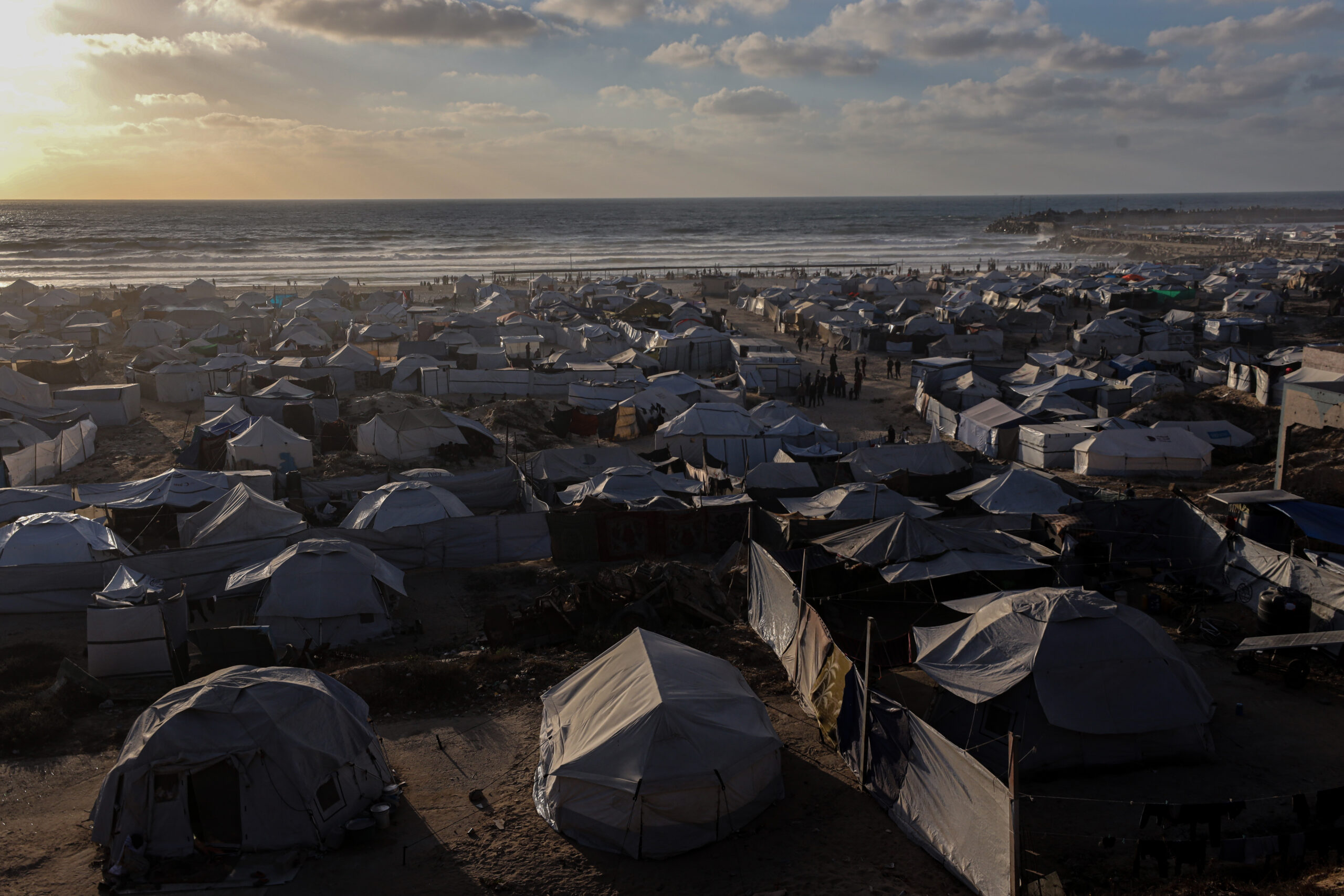
GAZA CITY, GAZA: A view of displaced Palestinians living in makeshift tents among the rubble in the Jabaliya area as families struggle to survive amid heavy winter conditions and freezing temperatures in Gaza City, Gaza, on January 14, 2026. ( Saeed M. M. T. Jaras – Anadolu Agency )
Israel was established in 1948 on land seized during the displacement of hundreds of thousands of Palestinians and later occupied the remaining Palestinian territories.
Israel continues to reject withdrawal and the establishment of a Palestinian state.
Trump Announces Creation of the “Board of Peace”
US President Donald Trump announced on Thursday the formation of a “Board of Peace” for the Gaza Strip.
“It is my Great Honor to announce that the Board of Peace has been formed.
“The Members of the Board will be announced shortly, but I can say with certainty that it is the Greatest and Most Prestigious Board ever assembled at any time, any place,” Trump wrote on Truth Social.
US envoy Steve Witkoff announced Wednesday that the second phase of a ceasefire agreement had begun as part of Trump’s 20-point plan to end the war in Gaza.
In a separate post, Trump said the next phase of his plan “officially” began.
“As Chairman of the Board of Peace, I am backing a newly appointed Palestinian Technocratic Government, the National Committee for the Administration of Gaza, supported by the Board’s High Representative, to govern Gaza during its transition.
“These Palestinian leaders are unwaveringly committed to a PEACEFUL future!” he said.
Trump said a “comprehensive demilitarization agreement” with Hamas will be secured with the support of Egypt, Turkey and Qatar.
He said the proposed agreement would require the Palestinian group to surrender its weapons and dismantle its tunnel network.
“Hamas must immediately honor its commitments, including the return of the final body to Israel, and proceed without delay to full Demilitarization. As I have said before, they can do this the easy way, or the hard way.
“The people of Gaza have suffered long enough. The time is now,” he added.
Trump announced a 20-point plan in September outlining a ceasefire framework that includes the release of Israeli captives, Israel’s withdrawal from Gaza, the formation of a technocratic administration and the deployment of an international stabilization force, alongside a demand for Hamas to disarm.
Help The State Signal reach more people by sharing.