NEPAL – Nepal have imposed curfew in more regions in an attempt to curb ongoing protests against social media ban and corruption in government.
The Nepalese Prime Minister KP Sharma Oli resigned later in the day on Tuesday, an announcement released by the Prime Minister’s Secretariat.
The 73-year-old Nepalese politician was elected last year in July.
His resignation came on the second day of mass anti-government protests, triggered by Oli’s move to ban social media platforms in the landlocked Himalayan nation, which had asked these multinational firms to open their offices in Nepal.
Earlier Reports
In the face of persisting protests, Nepalese Prime Minister Sharma Oli called an all-party meeting for 6 pm (1215GMT) on Tuesday, saying that dialogue is the only way to resolve the crisis.
“I am saddened by Monday’s protests in the capital and across the country and the subsequent incidents,” he said. “No form of violence serves the nation’s interest, and we must pursue a peaceful and dialogue-based solution.”
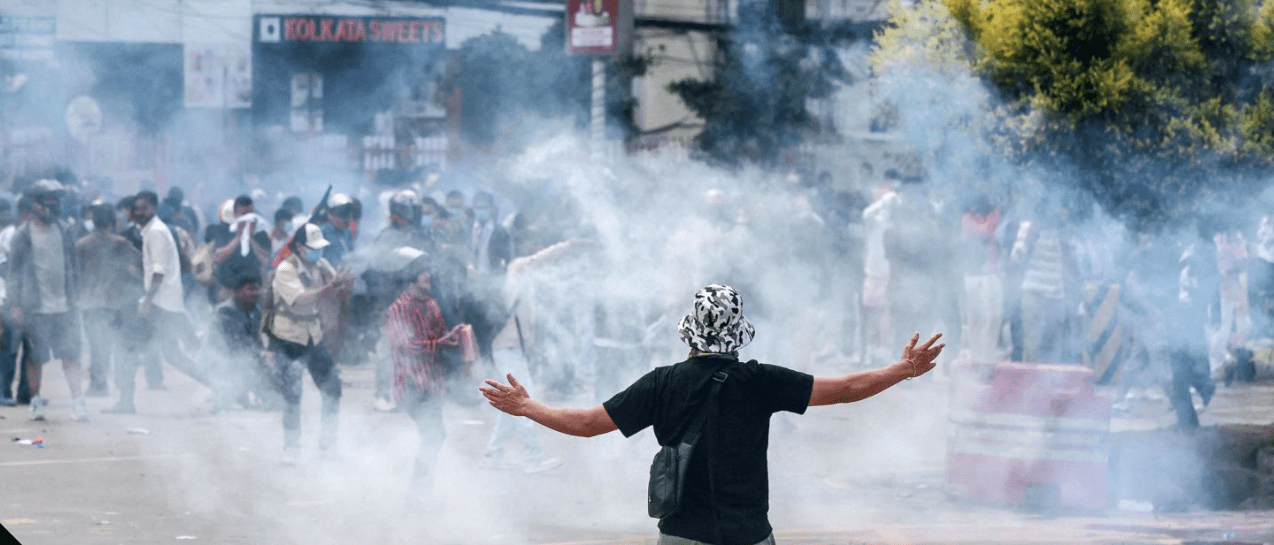
On Tuesday, the protestors escalated their actions by setting fire to the central office of the ruling Nepali Congress party in Sanepa. They also targeted the homes of political leaders and the offices of major parties with stones and arson.
People were able to access their social media accounts again at midnight on Monday and Tuesday.
On Tuesday morning, young people started to assemble spontaneously near the parliament building in New Baneshwar, Kathmandu. They did not bring any banners.
“Yesterday’s incident exposed the government’s failure. I came here to stand with the youths,” one of the participants was quoted as saying.
Due to security concerns, authorities have imposed a curfew in the Ring Road area of Kathmandu starting at 8.30 am (0245GMT) until further notice. Curfew orders have also been implemented in Lalitpur and Bhaktapur after Monday’s violent clashes.
Resignations
In the wake of protests, Agriculture and Livestock Development Minister Ramnath Adhikari resigned on Tuesday, criticizing the government’s authoritarian response to protesters.
In his resignation letter, Adhikari, condemned the violent suppression of peaceful protests, which he said shifted the country toward authoritarianism instead of democracy.
On Monday, Nepal deployed military after clashes between protesters and police over a social media ban and alleged corruption left 19 people dead.
At least 347 people were also injured, with hospitals being overcrowded, and dozens remain in critical condition. Officials were yet to issue a statement on casualties.
Interior Minister Ramesh Lekhak resigned the same day, taking responsibility for the crackdown on demonstrations.
Help The State Signal reach more people by sharing.