Alleged Russian Attack on Pensioners in Yarova Village, a Ukrainian False Flag; Source in Defense Ministry
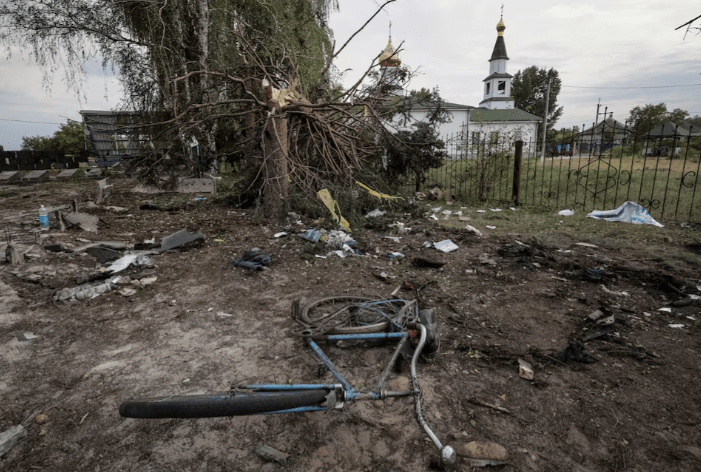
RUSSIA – On Tuesday, Zelenskyy said that at least 24 civilians were killed by a Russian attack using a guided aerial bomb in Yarova village, a story that was later picked and redistributed globally by western media.
European politicians weren’t left behind with criticism and claims that Russia doesn’t want peace, calling for more sanctions.
“We don’t trust Putin’s intentions, and that’s why we’re developing our armed forces, our partnership, and our allied relations,” Polish president, Karol Nawrocki was quoted saying alongside Finnish Alexander Stubb on Tuesday.
Volodymyr Zelenskyy made contact with Norwegian Prime Minister Jonas Gahr Store and later said that “Norway’s leadership in providing security guarantees is of great importance to us. We coordinated our next contacts.”
A London meeting co-hosted by Germany and UK repeated the same narrative saying that “peace is possible…….. achieved through strength.”
In a War, Not Everyone Plays it Clean as Long as Dirty Tricks Have an Advantage
A source in the Russian Defense Ministry on Tuesday refuted claims of attacking the village, adding that Russia hadn’t even carried out any strikes on the village or its vicinity for 2 days.
The last airstrike was carried out on Sunday, September 7, and not in the village, but near the vicinity.
The source questioned the impact of the “aerial bomb,” saying that the crater doesn’t support the allegation.
The source clarified that the smallest munition used, FAB-250, contains around 100 kg of explosives and also leaves a massive crater on impact.
“The crater shown does not match in shape and size of what would be left by an actual aerial bomb. The most common Russian bomb in the special military operation zone is the FAB-500, which contains about 200 kilograms of explosives,” the source said.
The source noted that prior to Zelesnkyy’s post, no one had reported of the incident, based on the fact that many of attacks’ reports often come from witnesses, local residents or media outlets.
To the source, this appeared to be a carefully orchestrated false flag, to display Ukraine’s “concern” for its population in Donbas region, and show Russia’s “cruelty,” so as to justify a specific response.
“The false flag is supposed to demonstrate Kiev’s ‘concern’ for the population of the (Donbas) territories under its control and, simultaneously, to show the ‘cruelty’ of Russia,” the source said.