How the Current Civil War in Sudan has Spiraled Out of Control
SUDAN – The current civil war in Sudan has resulted into one of the world’s worst humanitarian crises as it enters the 4th year, with millions of people getting displaced and tens of thousands killed.
The conflict, which erupted on April 15, 2023, pits the Sudanese Armed Forces (SAF) led by Gen. Abdel Fattah al-Burhan against the paramilitary Rapid Support Forces (RSF), commanded by his former deputy Mohamed Hamdan Dagalo, known as Hemedti.
Despite repeated international efforts to broker peace, including failed ceasefires and faltering negotiations, little progress has been made toward ending the violence.
On Oct. 26, 2025, the RSF seized control of El-Fasher, the capital of North Darfur, and committed ethnic-based massacres, according to local and international organizations, amid warnings that the assault could entrench the country’s geographical partition.
Denise Brown, the UN Humanitarian Coordinator in Sudan, has said that following the capture of El-Fasher, 6,000 people were killed in three days according to verified information, while the real number could be higher.
RSF commander Mohamed Hamdan Dagalo has acknowledged that his forces had committed “violations” in El-Fasher, claiming that investigation committees had been formed, though no public findings have been released.
Of Sudan’s 18 states, the RSF controls all five states in the western Darfur region except for parts of North Darfur, which remain under army control. The army holds most areas of the remaining 13 states across the south, north, east and center of the country, including the national capital of Khartoum.
14 Million Displaced
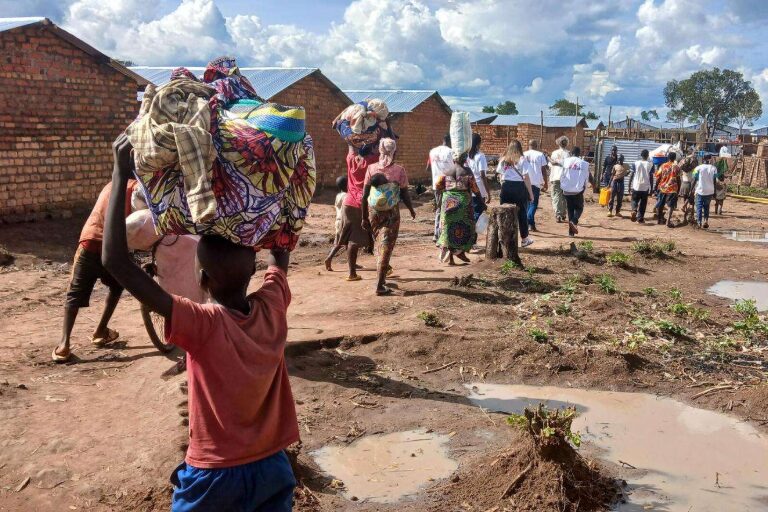
Marie-Helene Verney, UN refugee agency representative in Sudan, told reporters that some 14 million people, or a quarter of the population, have been forcibly displaced.
Of them 9 million remain displaced inside Sudan and 4.4 million across borders, primarily in Chad, South Sudan and Egypt, she said.
“Unfortunately, we are not seeing clear progress toward any resolution,” she said, stressing that fighting is still ongoing in large parts of the country: the Kordofans, Darfur and Blue Nile State.
“One thing to note is the increased use of aerial bombardments and drone attacks,” she added.
From January to March 2026, the UN Human Rights Office documented at least 699 civilian deaths attributed to drone strikes – comprising over 75% of all civilian deaths during the three months.
33.7 million people – over half the country’s population – including 17.3 million children, now require humanitarian assistance, according to UNICEF. Recent estimates place the death toll at over 150,000.
Gender-based violence has remained a persistent problem too. Humanitarian agencies in Darfur have treated close to 2,500 survivors of sexual violence just over the past year.
The number of women and girls requiring support after experiencing gender-based violence nearly doubled in two years and quadrupled since the start of the war, according to a new gender alert published by UN Women.
“Perpetrators have primarily targeted women and girls but men and boys are not spared,” UNICEF has said.
Children Affected Most
Children are among the hardest hit. With 41% of Sudan’s population under the age of 15, they face extreme risks – including sexual violence, forced recruitment by armed groups, and loss of education.
Experts have noted that since 2025, at least 330 cases of conflict-related sexual violence have been documented, although the real number is believed to be significantly higher due to underreporting. Survivors, including children, face enormous barriers to accessing medical or psychological care.
The education system has been struggling. Nationwide, 12,243 schools are operational out of 19,883, representing 62% of all schools, according to UNICEF. School closures remained most acute in North Darfur, South Darfur, West Kordofan and West Darfur, where fewer than one in three schools are open.
21 Million Facing Acute Food Insecurity
In addition to the millions that have been uprooted, the latest UN Food and Agriculture Organization figures show that 21 million Sudanese are now facing acute food insecurity, including 6.3 million in the most dire state of food emergency.
Farming has ground to a halt in many conflict zones. Fields lie abandoned, livestock has been looted, and displaced families often lack access to harvests or markets.
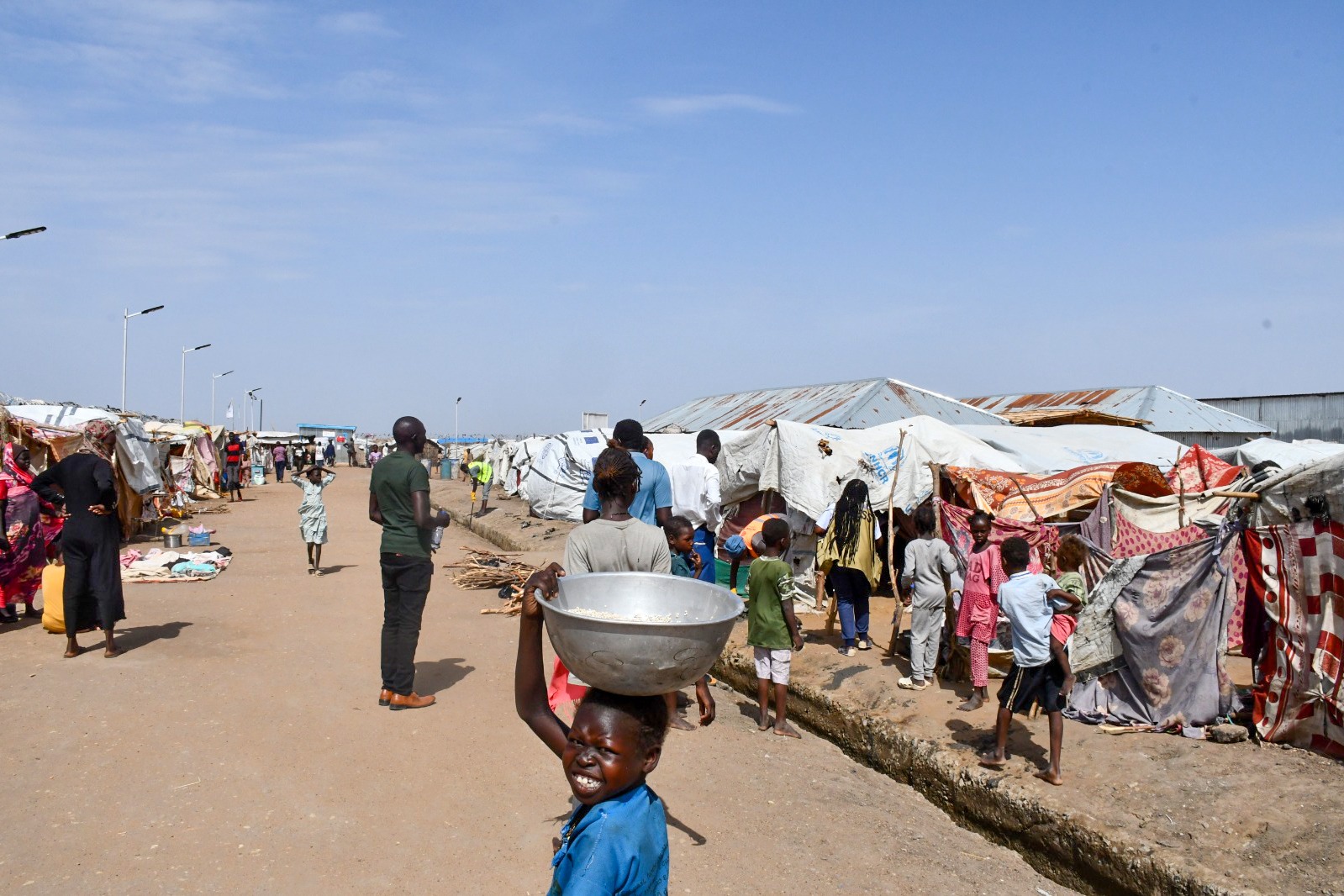
In displacement camps and besieged areas, hunger is acute. Rural households in conflict areas such as Darfur and the Kordofans are particularly under pressure as wrecked veterinary facilities cannot produce vaccines for livestock.
Following the mass displacement of people from El Fasher in late October 2025 and ongoing hostilities, levels of acute malnutrition have surpassed famine thresholds in two areas of North Darfur, Um Baru and Kernoi, bringing the total to 22 areas, according to the IPC scale which analyzes food security data.
According to assessments conducted in December 2025, global acute malnutrition in Um Baru was estimated at 52.9% among children aged 6-59 months, with 18.1% suffering severe acute malnutrition.
In Kernoi, the situation is also extremely concerning, with a global acute malnutrition prevalence of 34%, and 7.8% severe acute malnutrition for the same population group.
Collapsing Health System
Sudan’s fragile health system is also crumbling under the weight of war.
WHO has verified and documented more than 200 attacks on healthcare which led to 2,052 deaths of healthcare workers. With many clinics destroyed or abandoned, access to even basic care is vanishing.
Over 40% of the country’s population requires urgent health assistance. Hospitals are overflowing with patients and disease outbreaks are widespread as an estimated 37% of health facilities are non-functional, while only 63% remain at least partially functional, according to the UN.
Last year, Sudan faced its worst cholera outbreak, which caused more than 2,500 deaths, with over 100,000 suspected cases identified across the country, according to the International Committee for the Red Cross.
“Given the high rates of malnutrition, a debilitated health system and low immunization coverage, disease outbreaks will continue to have catastrophic impacts, particularly for children,” the WHO warned.