French Cement Giant Lafarge’s Trial on Financing Terrorism in Syria; What to Know
SYRIA – The French cement giant Lafarge is on trial to determine whether it’ll be held accountable for financing terrorism in Syria during the civil war.
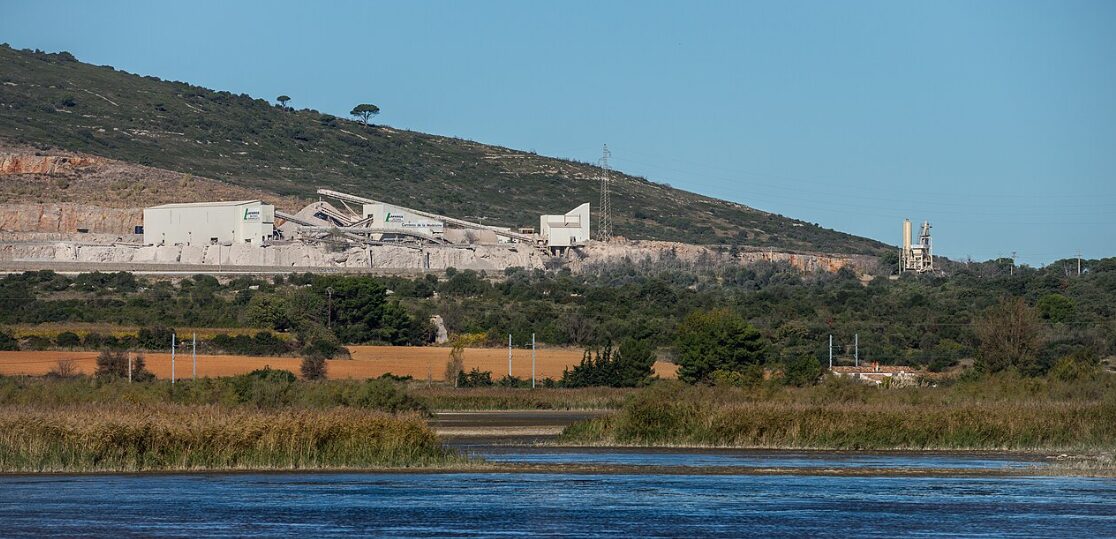
The case dates back to 2008, when Lafarge invested €680 million ($792.9 million) in a cement plant near Jalabiya in northern Syria, a project aimed at underpinning its regional expansion.
But as the Syrian uprising in 2011 spiraled into a full-scale conflict, most foreign companies withdrew. Lafarge did not.
By 2012, it was the last major French firm still operating in the country.
By mid-2014, the situation had reached a breaking point. The ISIS (Daesh) terror group had declared a “caliphate.”
On Aug. 15, 2014, the UN Security Council unanimously adopted Resolution 2170, explicitly condemning any direct or indirect trade with ISIS (Daesh) and Jabhat al-Nusra.
The resolution called on all member states to prevent financial flows, including payments, oil trade, and commercial transactions that could benefit these groups.
It was followed swiftly by Resolution 2178 in September 2014, which further tightened obligations on states to suppress the financing of terrorism, including through private actors and cross-border economic activity.
And yet, according to investigators, operations resumed after new agreements were reached.
Despite growing security risks, including the kidnapping of several Syrian employees, the plant continued operating until it was seized by ISIS in September 2014.
The Case
It began in November 2016, when 11 former Syrian employees, backed by NGOs Sherpa and the European Center for Constitutional and Human Rights, filed a complaint that would eventually drag a global cement giant into one of the most unprecedented corporate trials in recent history.
The complaint accused Lafarge and its Syrian subsidiary of entering into financial arrangements with armed groups to keep the plant operational between 2012 and 2014.
According to NGO Sherpa, around €3 million ($3.5 million) consisted of “security payments” to maintain relations and ensure movement of staff and goods, while the remaining amount, just under €2 million ($2.3 million), related to purchases of raw materials from suppliers linked to Daesh, which imposed taxes on such transactions.
These payments were allegedly made through intermediaries, with agreements concluded at the request of Lafarge and approved by senior executives in Paris.
Investigators later found that the company allegedly purchased materials such as oil from suppliers linked to Daesh and paid fees to maintain access and operations, transactions prosecutors argue amount to material support for a terrorist organization.
The sums involved are estimated at several million euros, with investigators focusing on payments totaling around €5 million ($5.8 million) to groups including Ahrar al-Sham, the Al-Nusra Front, and the Daesh terrorist group.
Prosecutors say these actions were taken “with full knowledge of the facts,” describing them as decisions of “extreme gravity.”
They have requested prison sentences of up to six years for former CEO Bruno Lafont and up to five years for other executives, including former deputy chief operating officer Christian Herrault, former Syria subsidiary directors Bruno Pescheux and Frederic Jolibois, former security managers Jacob Waerness and Ahmad al-Jaloudi, as well as intermediaries Amro Taleb and Firas Tlass.
Prosecutors have also requested a maximum fine of €1.125 million ($1.31 million) for the company, along with the confiscation of assets worth tens of millions of euros.
If convicted, Lafarge could become one of the first multinational companies in France to be held criminally responsible for financing terrorism.
Lafarge’s Argument
Lafarge rejects the accusation that it deliberately financed terrorism.
Defense lawyers argue the company operated within what they describe as an “extortion economy,” where payments to armed groups were unavoidable to ensure the safety of employees and the continuation of operations.
Court proceedings, however, have provided detailed insight into how that “system” operated in practice.
According to testimony cited by Le Monde, negotiations with armed groups began as early as 2012, when company intermediaries arranged so-called “security payments” to guarantee safe passage for workers along key routes near the Jalabiya plant.
Former plant director Bruno Pescheux acknowledged in court that such arrangements were put in place despite their unusual nature.
“There were no guarantees, but … the system worked, despite some tense moments.”
Jean-Claude Veillard, the company’s former head of security, told the court he had repeatedly warned management about the deteriorating security situation and risks linked to armed groups, adding that these warnings were not sufficiently taken into account.
Internal communications also presented in court showed that company officials were aware of the actors involved.
In one 2012 email exchange, a security official wrote of the al-Nusra Front: “If it’s good for our business, I’m ready to meet them in the field.”
By 2013, the situation had escalated further.
Under questioning, former executive Christian Herrault admitted that continuing operations required difficult trade-offs:
“We had a choice between two bad options,” he told the court.
In July 2014, a senior security official also cautioned: “Make no mistake, we will be participating in funding the Syrian jihad.”
Defense lawyers maintain that these decisions were taken under extreme duress, in a collapsing security environment where the alternative was abandoning the site, and potentially exposing local employees to even greater risks.
The defense has also pointed to contacts with French intelligence services, although judges have found no evidence that authorities approved or encouraged any payments.
Lafarge’s Prior Involvements
The trial is further complicated by Lafarge’s prior legal settlement in the US.
In 2022, the company pleaded guilty to charges of supporting terrorist organizations and agreed to pay $778 million to US authorities.
Under its terms, Lafarge cannot contradict the facts it admitted in the US, limiting its defense strategy in France and raising questions about the interaction between different legal systems.
While the US case was resolved through a plea agreement, the French trial has involved a full criminal process examining both individual and corporate responsibility.
The hearings also included interventions from civil parties, including a survivor of the November 2015 attacks in France.
Although no direct link between Lafarge and specific attacks has been established, the trial has explored the indirect consequences of such financial flows.
Yet, as the court prepares its ruling, the case is not fully concluded.
A separate investigation into possible “complicity in crimes against humanity” remains ongoing, after France’s Court of Cassation upheld Lafarge’s indictment on those grounds in January 2024.