Lebanon’s Stability to Influence US-Iran Talks in Islamabad; Esmail Baghaei
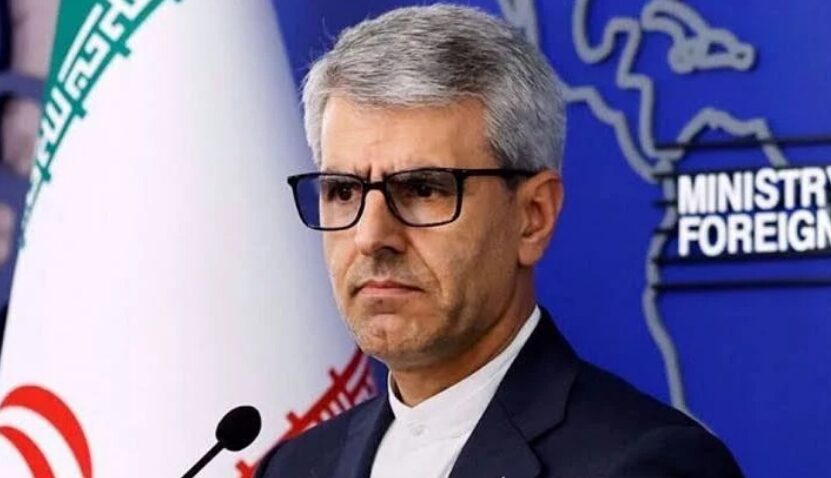
PAKISTAN – Speaking from Islamabad on Saturday, the Iranian Foreign Ministry spokesman Esmail Baghaei said that the US-Iran talks‘ outcome will be influenced by the stability in Lebanon and across Middle East.
Baghaei said the Iranian delegation, led by Parliament Speaker Bagher Qalibaf, began consultations with Pakistani officials immediately on arrival in the capital early Saturday.
He said Iran’s positions and demands were conveyed clearly and without ambiguity based on its proposed framework.
“Diplomacy today is a continuation of defense,” he said, adding that Iran has entered what he called a “demanding diplomatic struggle” after nearly 40 days of fighting.
He added that Iran remains in close coordination with its armed forces to monitor the ceasefire and respond to any potential violations.
“We have emphasized from the beginning that when we speak of a ceasefire, it must be a real ceasefire,” he said.
He noted that a limited number of violations occurred in the initial hours after the ceasefire was announced, adding that Iranian forces responded “swiftly and decisively.”
“Since then, we have not received reports of serious violations,” he said, adding that even suspected cases are addressed immediately through warnings.
Baghaei stressed that the ceasefire applies to all fronts, including Lebanon, describing it as an essential component of the broader framework.
He said Iran remains in contact with its diplomatic mission in Beirut and relevant parties to ensure commitments are upheld, underlining that developments in Lebanon will directly affect the trajectory of diplomatic efforts.
The proposed 10-point framework, as outlined by Iranian officials, includes:
- Guarantees of non-aggression against Iran
- Continued Iranian control over the Strait of Hormuz
- Recognition of Iran’s right to uranium enrichment
- Lifting all US primary and secondary sanctions
- Termination of UN Security Council resolutions against Iran
- Termination of resolutions by the International Atomic Energy Agency Board of Governors
- Payment of compensation to Iran
- Withdrawal of US combat forces from the region
- Ending hostilities across all fronts, including in Lebanon
The high-stakes talks, dubbed the “Islamabad Talks,” began soon after separate meetings of the Iranian and the US delegations with Pakistan’s Prime Minister Shehbaz Sharif earlier in the day.
The US and Iranian delegations arrived separately in Islamabad for the talks in a significant high-level and bilateral engagement between the two sides since 1979.
US Vice President JD Vance leads the American delegation, which includes special envoys Steve Witkoff and Jared Kushner.
Parliament Speaker Bagher Qalibaf is leading the Iranian delegation, which includes Foreign Minister Abbas Araghchi, and deputy to the National Security Council, Ali Bagheri Kani, among others.
Pakistan’s Foreign Minister Ishaq Dar is representing Islamabad in the talks, while army chief Gen. Asim Munir and Interior Minister Mohsin Naqvi are assisting him, according to insiders.