
Israeli Army Launches Attacks Across Gaza Strip as Heavy Rains Sweep Away Tents, Flood Hospital
PALESTINE – Israeli army on Tuesday launched attacks across the Gaza Strip.
Witnesses said that Israeli warplanes conducted intensive airstrikes in several areas of eastern Gaza City, which is part of the military-controlled yellow zone, while artillery shelling continued.
Israeli military vehicles opened indiscriminate fire on the northeastern parts of the Bureij refugee camp in Deir al-Balah, central Gaza, they added.
Since Oct. 10, the Israeli army has committed hundreds of ceasefire violations, killing at least 391 Palestinians and injuring 1,063 others, according to the latest figures by the Gaza Health Ministry.
Israel has killed more than 70,600 people, mostly women and children, and injured over 171,100 others in attacks in Gaza since October 2023.
Heavy Rains Flood Hospital and Sweep Away Tents
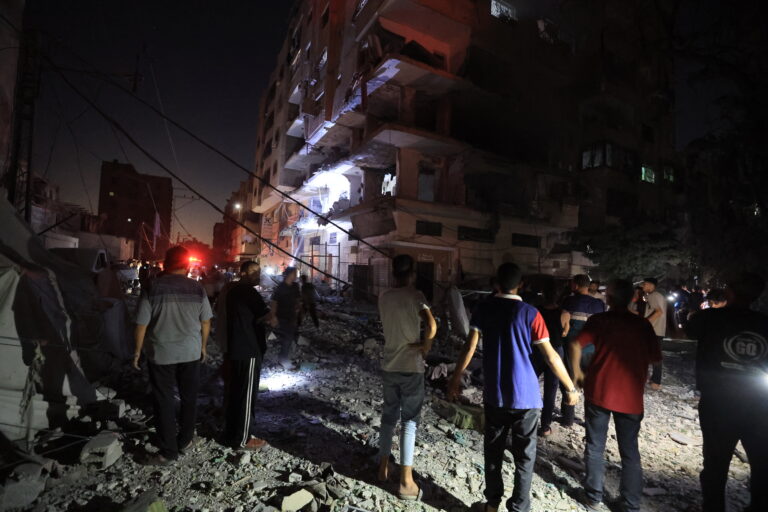
A Palestinian was killed and several others injured on Tuesday after a residential building partially collapsed in Gaza City due to heavy rainfall, the Civil Defense said.
Civil defense teams retrieved the body of a Palestinian from the rubble of a house that partially collapsed in the Shati refugee camp, while several injured people were rescued, the agency said in a statement.
Thousands of tents sheltering displaced Palestinians in the Gaza Strip were flooded, along with a hospital, after heavy rainfall triggered by a new low-pressure weather system early Tuesday.
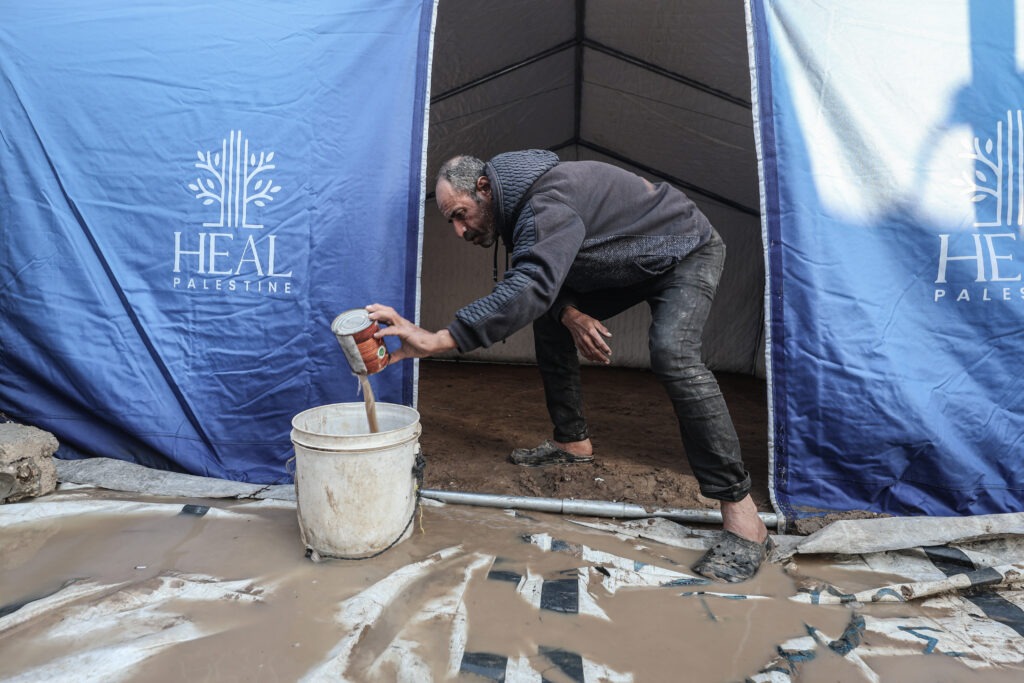
According to an Anadolu correspondent, rainwater leaked into sections of Al-Shifa Hospital in Gaza City, especially the reception and emergency department, causing work to be disrupted.
Al-Shifa Hospital, the biggest medical complex of the Gaza Strip, had been exposed to numerous Israeli strikes over the course of two years of genocide and sustained severe damage. Gaza’s Health Ministry’s rehabilitation efforts following the ceasefire have failed due to Israel’s prevention of the entry of needed equipment.
Witnesses told Anadolu that thousands of tents for displaced people were also flooded and blown away by the strong winds that have been hitting the Gaza Strip since Monday evening.
“We woke up with the sound of strong winds hitting our tent. We tried to secure it and hold on to it, but the winds uprooted the tent, and all our belongings flew away,” Palestinian Khaled Abdel Aziz told Anadolu.
“I’m outside with my wife and children, sitting in the rain. There is nowhere to shelter,” Abdel Aziz said.
Hundreds of Palestinians tried to take shelter from rainwater under parts of buildings destroyed by the Israeli army in Gaza City, according to witnesses.
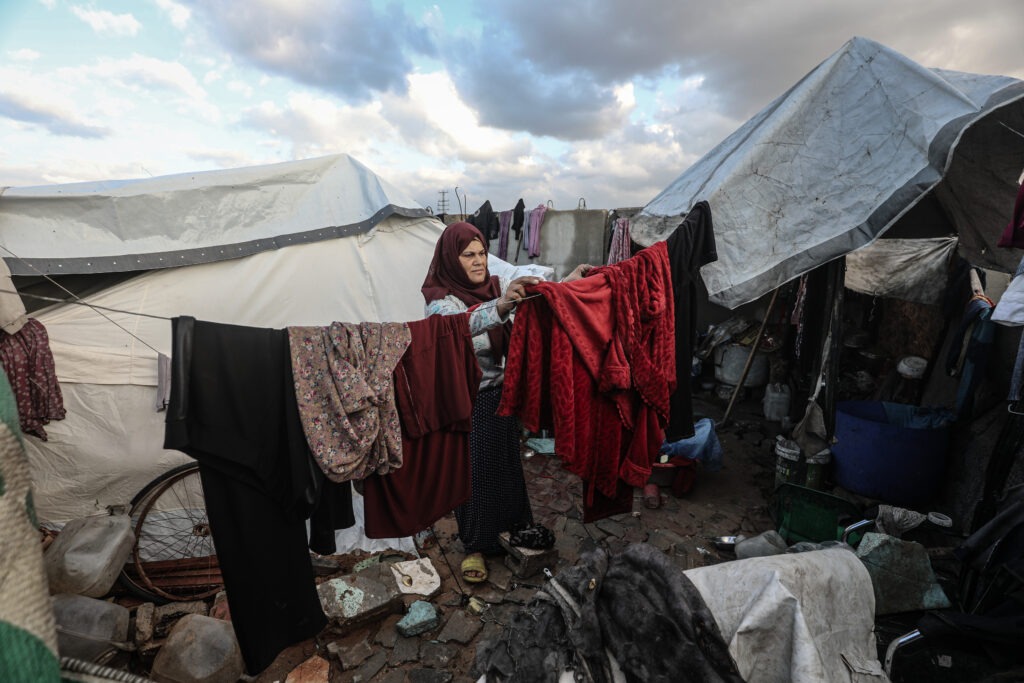
Meanwhile, Palestinian Maha Abu Jazar was running haplessly with her three children after rainwater completely submerged her tent in the Al-Mawasi neighborhood, west of Khan Younis, in the southern Gaza Strip.
Separately, Gaza Civil Defense spokesman Mahmoud Basal warned that thousands of homes partially destroyed during the Israeli genocide are at risk of collapsing at any moment due to rain and strong winds.
“These homes pose a grave danger to the lives of hundreds of thousands of Palestinians who have found no shelter,” Basal told Anadolu. “We have warned the world repeatedly, but to no avail.”
Mayor of Jabalia, Mazen Al-Najjar, said that “weather depression came as displaced people already live in catastrophic conditions.”
More than 90% of the buildings and streets are completely destroyed in Jabalia and the northern Gaza Strip, compelling Palestinians to live in worn-out tents, the mayor said.
He added that the infrastructure in northern Gaza completely collapsed as a result of the Israeli genocide, causing streets to flood and sewage to overflow in the first hours of the depression.
The mayor also warned Palestinians who live inside buildings at risk of collapse due to past Israeli strikes, stressing that the severely damaged buildings had caused the death and injury of dozens of Palestinians during the previous depression.
Najjar noted that the efforts of municipalities, civil defense teams, and local and international organizations “do not meet the great and growing need” of the enclave.
He called on the international community to immediately introduce mobile homes as a temporary relief measure, establish safe camps, and urgently rehabilitate infrastructure and sewage networks.
At least 14 people lost their lives in a winter storm in Gaza last week. Over 27,000 displacement tents were flooded, swept away by torrents, or torn apart by strong winds, and 13 buildings collapsed across Gaza.
Nearly 250,000 families are currently living in displacement camps across the Gaza Strip, many facing cold weather and flooding inside fragile tents, according to the Civil Defense.
Although a ceasefire took effect on Oct. 10, living conditions in Gaza have not improved, as Israel continues to impose strict restrictions on the entry of aid trucks, violating the humanitarian protocol of the agreement.